Products for Research Use Only

FBXW7 Rabbit Polyclonal Antibody
CAT: 0992-ER1706-78Size: 100 µLDry Ice: NoHazardous: No
Product image 1Product image 2Product image 3
1 / 3
CAT#:0992-ER1706-78Size:100 µL
Selected
24/48H Stock Items & 2 to 6 Weeks non Stock Items.
Quick Request Actions
Description
This gene encodes a member of the F-box protein family which is characterized by an approximately 40 amino acid motif, the F-box. The F-box proteins constitute one of the four subunits of ubiquitin protein ligase complex called SCFs (SKP1-cullin-F-box), which function in phosphorylation-dependent ubiquitination. The F-box proteins are divided into 3 classes: Fbws containing WD-40 domains, Fbls containing leucine-rich repeats, and Fbxs containing either different protein-protein interaction modules or no recognizable motifs. The protein encoded by this gene was previously referred to as FBX30, and belongs to the Fbws class; in addition to an F-box, this protein contains 7 tandem WD40 repeats. This protein binds directly to cyclin E and probably targets cyclin E for ubiquitin-mediated degradation. Other well established pro-proliferative targets of FBXW7 are c-Myc and Notch1. Mono-allelic mutations in this gene are detected in sporadic cancers [e.g., cholangiocarcinoma (35%), T-ALL (31%), endometrial carcinoma (16%), colorectal carcinoma (16%), bladder cancer (10%), gastric carcinoma (6%), lung squamous cell carcinoma (5%), etc.]. These findings implicate the gene's potential role in the pathogenesis of human cancers. Despite being commonly acknowledged as a haploinsufficient tumor suppressor, mutations are not found in some cancers, such as acute myeloid leukemia and multiple myeloma. One possibility is that FBXW7 substrate stabilization is detrimental in these neoplasms. For example, the FBXW7 substrate C/EBPα suppresses AML[8] and multiple myelomas require constitutive NF-κB signaling; therefore, disruption of FBXW7-mediated ubiquitylation of IκBd in these tumors results in cell death.
CAS Number
9007-83-4
Product Name Alternative
AGO antibody Archipelago antibody Archipelago homolog antibody Archipelago, Drosophila, homolog of antibody CDC4 antibody CDC4, S.cerevisiae, homolog of antibody DKFZp686F23254 antibody F box and WD 40 domain protein 7 (archipelago homolog, Drosophila) antibody F box and WD 40 domain protein 7 antibody F box and WD repeat domain containing 7 antibody F box protein FBW7 antibody F box protein FBX30 antibody F box protein SEL 10 antibody F box protein SEL10 antibody F-box and WD repeat domain containing 7, E3 ubiquitin protein ligase antibody F-box and WD-40 domain-containing protein 7 antibody F-box protein FBX30 antibody F-box/WD repeat-containing protein 7 antibody FBW6 antibody FBW7 antibody FBX30 antibody FBXO30 antibody FBXW6 antibody FBXW7 antibody FBXW7_HUMAN antibody FLJ16457 antibody hAgo antibody hCdc4 antibody Homolog of C elegans sel 10 antibody Homolog of C.elegans sel10 antibody SEL 10 antibody SEL-10 antibody SEL10 antibody
Abbreviation
hAgo, FBXW7, FBW7
Swiss Prot
Q969H0 Human, Q8VBV4 Mouse, D3Z902 Rat
Cellular Locus
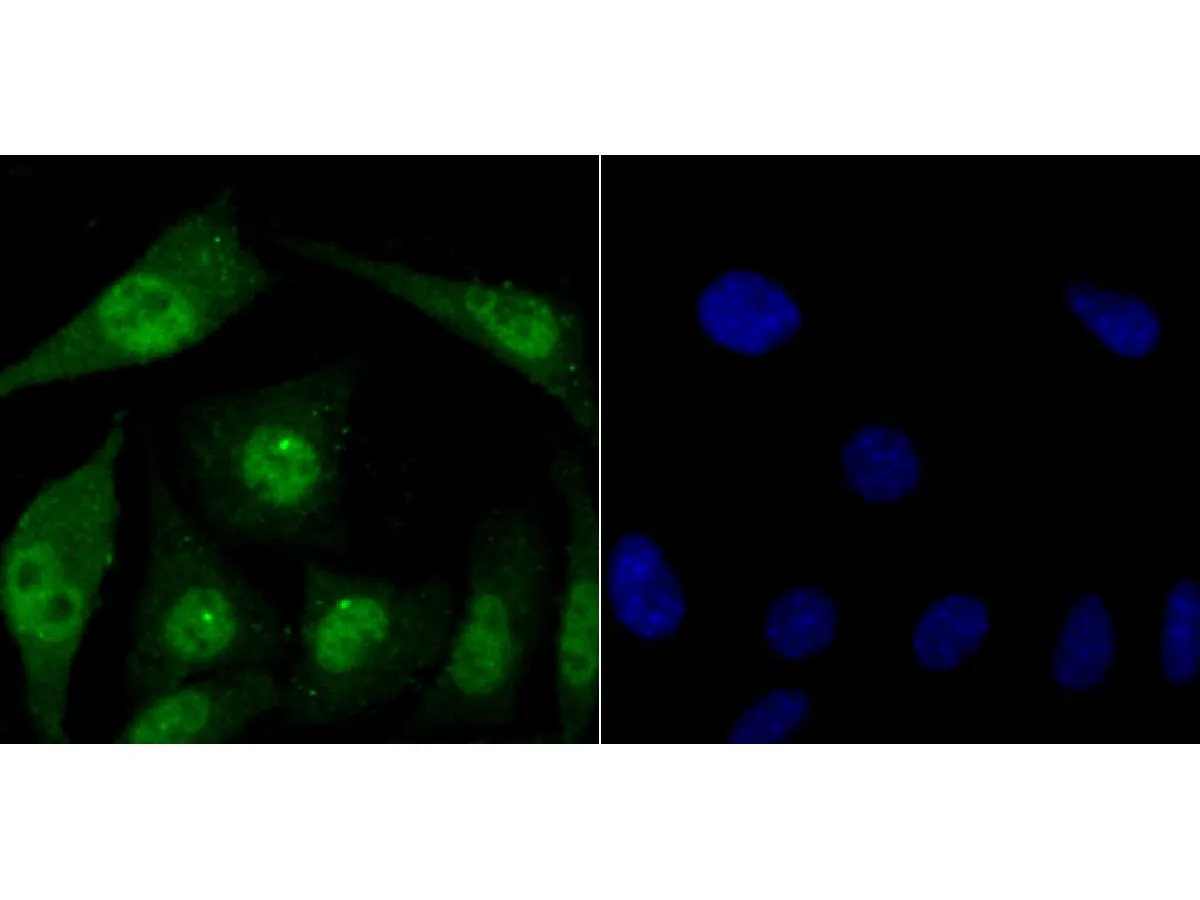
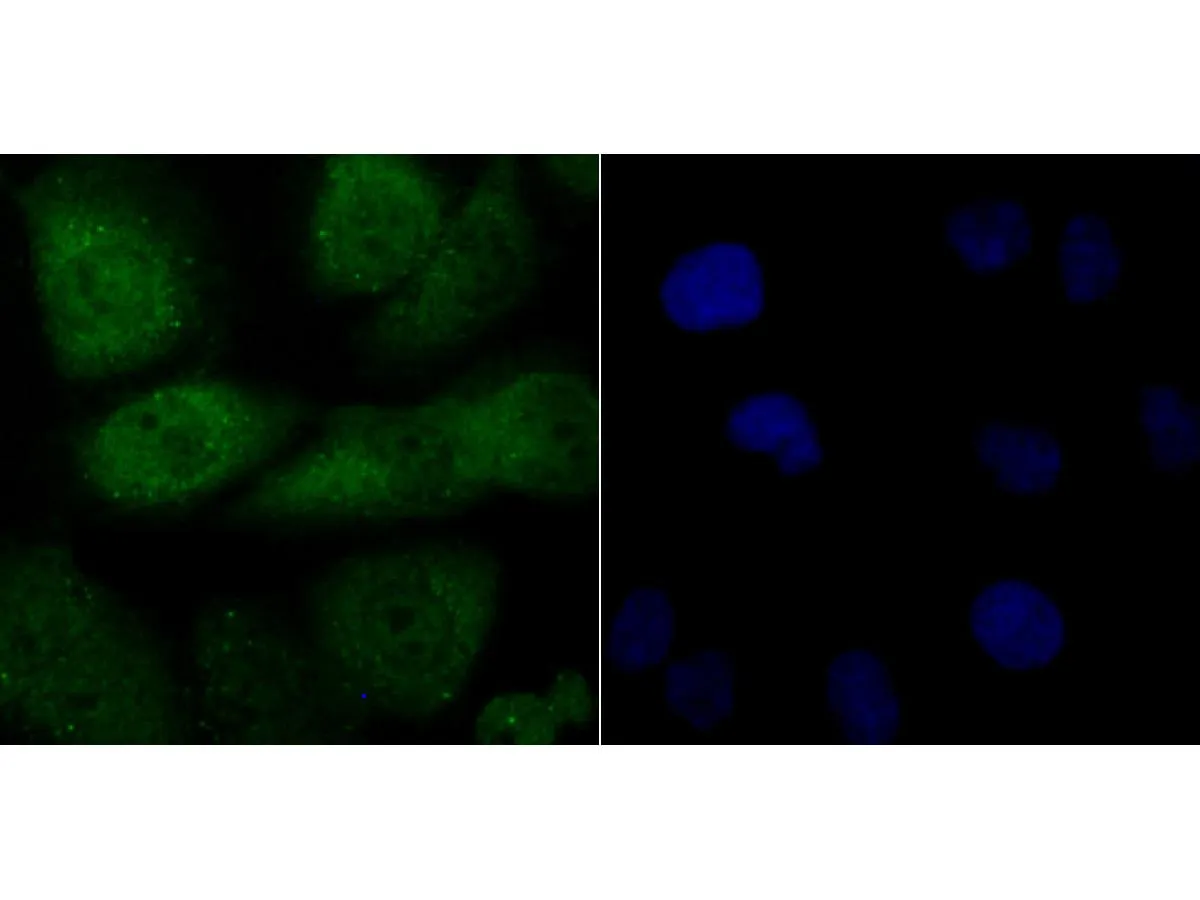
Cytoplasm. Nucleus.
Host
Rabbit
Species Reactivity
Human, Mouse, Rat
Immunogen
Recombinant protein within human FBXW7 aa 84-327.
Isotype
IgG
Conjugation
Non-conjugated
Type
Rabbit polyclonal Antibody
Applications
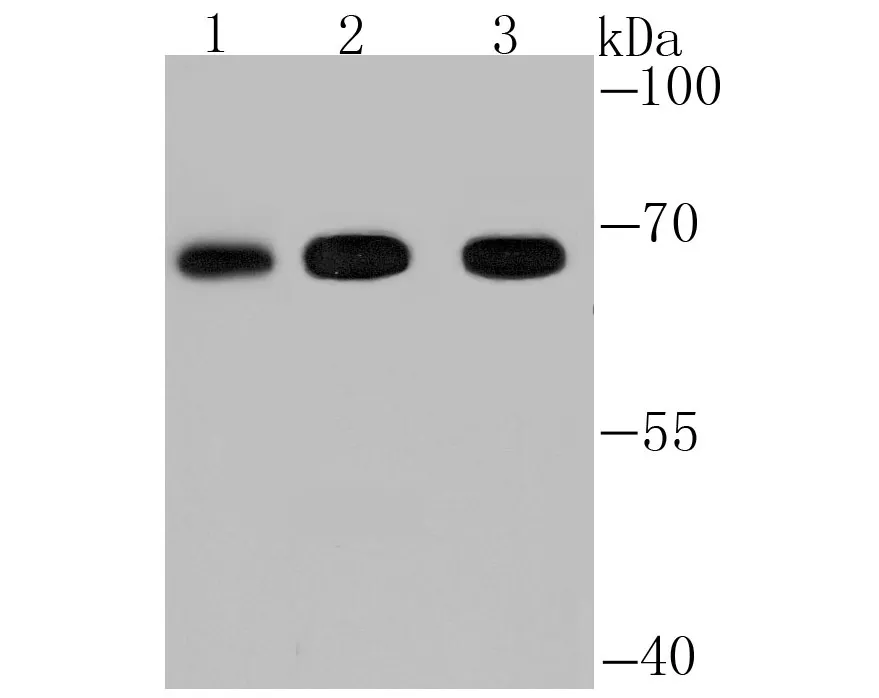
WB, IF-Cell, FC, IHC-P
Positive Control
Mouse spleen tissue lysate, rat lung tissue lysate, HepG2 cell lysate, HUVEC, SH-SY5Y.
Concentration
1 mg/mL
Dilution
WB: 1:500-1:1,000;IF-Cell: 1:500-1:2,000;FC: 1:50-1:100;IHC-P: 1:50-1:200
Purity
Immunogen affinity purified.
Form
Liquid
Buffer
1*PBS (pH7.4), 0.2% BSA, 50% Glycerol. Preservative: 0.05% Sodium Azide.
Molecular Weight
Predicted band size: 80 kDa
Storage Conditions
Store at +4°C after thawing. Aliquot store at -20°C or -80°C. Avoid repeated freeze / thaw cycles.
Recombinant Antibody
No