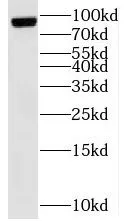
TNFAIP3 antibody

CAT:
710-FNab08818
Size:
100 µg
  • Availability: 24/48H Stock Items & 2 to 6 Weeks non Stock Items.
  • Dry Ice Shipment: No
TNFAIP3 antibody - image 1
TNFAIP3 antibody - image 2
Thumbnail 1
Thumbnail 2

TNFAIP3 antibody

  • Background:

    Ubiquitin-editing enzyme that contains both ubiquitin ligase and deubiquitinase activities. Involved in immune and inflammatory responses signaled by cytokines, such as TNF-alpha and IL-1 beta, or pathogens via Toll-like receptors (TLRs) through terminating NF-kappa-B activity. Essential component of a ubiquitin-editing protein complex, comprising also RNF11, ITCH and TAX1BP1, that ensures the transient nature of inflammatory signaling pathways. In cooperation with TAX1BP1 promotes disassembly of E2-E3 ubiquitin protein ligase complexes in IL-1R and TNFR-1 pathways; affected are at least E3 ligases TRAF6, TRAF2 and BIRC2, and E2 ubiquitin-conjugating enzymes UBE2N and UBE2D3. In cooperation with TAX1BP1 promotes ubiquitination of UBE2N and proteasomal degradation of UBE2N and UBE2D3. Upon TNF stimulation, deubiquitinates 'Lys-63'-polyubiquitin chains on RIPK1 and catalyzes the formation of 'Lys-48'-polyubiquitin chains. This leads to RIPK1 proteasomal degradation and consequently termination of the TNF-or LPS-mediated activation of NF-kappa-B. Deubiquitinates TRAF6 probably acting on 'Lys-63'-linked polyubiquitin. Upon T-cell receptor (TCR) -mediated T-cell activation, deubiquitinates 'Lys-63'-polyubiquitin chains on MALT1 thereby mediating disassociation of the CBM (CARD11:BCL10:MALT1) and IKK complexes and preventing sustained IKK activation. Deubiquitinates NEMO/IKBKG; the function is facilitated by TNIP1 and leads to inhibition of NF-kappa-B activation. Upon stimulation by bacterial peptidoglycans, probably deubiquitinates RIPK2. Can also inhibit I-kappa-B-kinase (IKK) through a non-catalytic mechanism which involves polyubiquitin; polyubiquitin promotes association with IKBKG and prevents IKK MAP3K7-mediated phosphorylation. Targets TRAF2 for lysosomal degradation. In vitro able to deubiquitinate 'Lys-11'-, 'Lys-48'-and 'Lys-63' polyubiquitin chains. Inhibitor of programmed cell death. Has a role in the function of the lymphoid system. Required for LPS-induced production of proinflammatory cytokines and IFN beta in LPS-tolerized macrophages.
  • Synonyms:

    Tumor necrosis factor alpha-induced protein 3 (TNF alpha-induced protein 3) |OTU domain-containing protein 7C|Putative DNA-binding protein A20|Zinc finger protein A20|A20p50|A20p37|TNFAIP3|OTUD7C
  • Gene ID:

    7128
  • UniProt:

    P21580
  • Host:

    Rabbit
  • Reactivity:

    Human, Mouse, Rat
  • Immunogen:

    Tumor necrosis factor, alpha-induced protein 3
  • Target:

    TNFAIP3
  • Clonality:

    Polyclonal
  • Isotype:

    IgG
  • Applications:

    ELISA, WB
  • Field of Research:

    Stem Cells, Immunology, Metabolism
  • Purification:

    Immunogen affinity purified
  • Dilution:

    WB: 1:500-1:2000
  • Purity:

    ≥95% as determined by SDS-PAGE
  • Form:

    Liquid
  • Molecular Weight:

    90 kDa
  • Storage Conditions:

    PBS with 0.02% sodium azide and 50% glycerol pH 7.3, -20°C for 12 months (Avoid repeated freeze / thaw cycles.)
  • Tested Applications:

    ELISA, WB