Nigericin

CAT:
436-6698
Size:
1 Each
  • Availability: 24/48H Stock Items & 2 to 6 Weeks non Stock Items.
  • Dry Ice Shipment: No
Nigericin - image 1
Nigericin - image 2
Thumbnail 1
Thumbnail 2

Nigericin

  • Description:

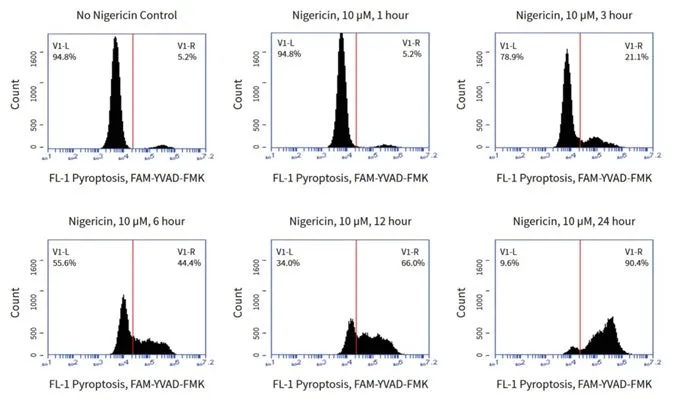
    Nigericin is a potent microbial toxin and potassium ionophore that can induce pyroptosis. It induces a net decrease in intracellular potassium. This is critical for the oligomerization of the NLRP3 inflammasome and caspase-1 activation in pyroptosis.
  • Specifications:

    Nigericin
  • Label:

    ICT
  • Cell Type:

    Jurkat
  • Type:

    Cell Viabiity
  • Assay Protocol:

    1. Prepare standards in Protein-Free Sample Diluent., 2. Dilute samples in Protein-Free Sample Diluent., Serum samples should generally be diluted at least 1:50 in order to minimize backgrounds caused by non-specific antibody binding., To dilute the sample 1:100, add 1 part sample to 99 parts Protein-Free Sample Diluent. For example, add 10 μL sample to 990 μL Protein-Free Sample Diluent for a total of 1,000 μL., Highly concentrated samples may need to be diluted 1:1,000 or more., 3. Once diluted, run the assay according to the specific ELISA protocol., 4. Analyze the data. If the samples were diluted 1:100, the dilution factor must be considered when calculating the value. For example, if the sample generated an OD value that correlates to 500 pg/ mL based on the standard curve, multiply by the dilution factor of 100 to yield a true concentration of 50,000 pg/mL = 50 ng/mL in the sample.
  • Shipping Conditions:

    Ships overnight (domestic), International Priority Shipping
  • Storage Temperature:

    -20°C
  • Calculated Molecular Weight:

    746.94 g/mol
  • Target Description:

    Activation of the NLRP3 inflammasome in myeloid cells follows exposure to pathogen-associated molecular patterns (first signal) and ATP (second signal). This leads to oligomerization and assembly of a high molecular weight (~700 kDa) multimeric inflammasome complex, which leads to the conversion of pro-caspase-1 into the catalytically active form. Inflammatory caspases, such as caspase-1, or interleukin-converting enzyme (ICE), play a central role in innate immunity by recognizing cytosolic foreign danger signals and initiating a two-fold response. First, caspase-1 proteolytically converts the proforms of the two important pro-inflammatory cytokines, interleukin-1ß (IL-1ß) and interleukin-18 (IL-18), into their active forms, which are secreted. Second, caspase-1 or caspase-11 triggers a form of lytic, programmed cell death known as pyroptosis. Nigericin is a potent microbial toxin derived from Streptomyces hygroscopicus. It acts as a potassium ionophore, inducing a net decrease in intracellular levels of potassium, which is crucial for oligomerization of the NLRP3 inflammasome and activation of caspase-1. Nigericin requires signaling through pannexin-1 to induce caspase-1 activation and IL-1ß processing and release. It has been shown to generate a robust caspase-1 activation response in various cell lines, including Jurkat and THP-I cells.