Products for Research Use Only

Anti-E2F4 Monoclonal Antibody
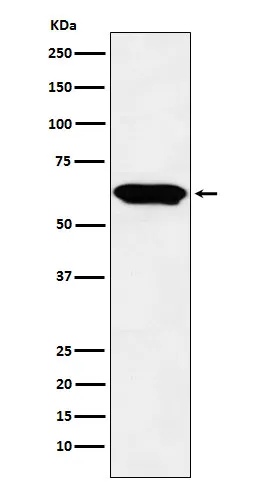
CAT: 0519-M01920Size: 100 µL/VialDry Ice: NoHazardous: No
Product image 1
1 / 1
CAT#:0519-M01920Size:100 µL/Vial
Selected
24/48H Stock Items & 2 to 6 Weeks non Stock Items.
Quick Request Actions
Description
Boster Bio Anti-E2F4 Monoclonal Antibody catalog # M01920. Tested in WB, IHC, ICC/IF, Flow Cytometry applications. This antibody reacts with Human.
Synonyms
Inhibitor of nuclear factor kappa-B kinase subunit alpha; I-kappa-B kinase alpha; IKK-A; IKK-alpha; IkBKA; IkappaB kinase;2.7.11.10; Conserved helix-loop-helix ubiquitous kinase; I-kappa-B kinase 1; IKK1; Nuclear factor NF-kappa-B inhibitor kinase alpha; NFKBIKA; Transcription factor 16; TCF-16; CHUK; IKKA, TCF16
Gene Name
E2F4
Gene ID
1874
UniProt
Q16254
Host
Rabbit
Reactivity
Human
Immunogen
A synthesized peptide derived from human E2F4 Transcription activator that binds DNA cooperatively with DP proteins through the E2 recognition site, 5'-TTTC[CG]CGC-3' found in the promoter region of a number of genes whose products are involved in cell cycle regulation or in DNA replication.
Clonality
Monoclonal
Clone
Clone: AFDF-5
Tissue Specificity
Widely expressed.
Applications
WB, IHC, ICC, IF, Flow Cytometry
Field of Research
Domain Families, Epigenetics and Nuclear Signaling, Forkhead Box, Nuclear, Signaling Pathways, Stem Cells, TGF Beta, Transcription
Purification
Affinity-chromatography
Concentration
0.5mg/ml
Form
Liquid
Function
Serine kinase that plays an essential role in the NF- kappa-B signaling pathway which is activated by multiple stimuli such as inflammatory cytokines, bacterial or viral products, DNA damages or other cellular stresses. Acts as part of the canonical IKK complex in the conventional pathway of NF-kappa-B activation and phosphorylates inhibitors of NF-kappa-B on serine residues. These modifications allow polyubiquitination of the inhibitors and subsequent degradation by the proteasome. In turn, free NF-kappa-B is translocated into the nucleus and activates the transcription of hundreds of genes involved in immune response, growth control, or protection against apoptosis. Negatively regulates the pathway by phosphorylating the scaffold protein TAXBP1 and thus promoting the assembly of the A20/TNFAIP3 ubiquitin-editing complex (composed of A20/TNFAIP3, TAX1BP1, and the E3 ligases ITCH and RNF11) . Therefore, CHUK plays a key role in the negative feedback of NF-kappa-B canonical signaling to limit inflammatory gene activation. As part of the non-canonical pathway of NF-kappa-B activation, the MAP3K14-activated CHUK/IKKA homodimer phosphorylates NFKB2/p100 associated with RelB, inducing its proteolytic processing to NFKB2/p52 and the formation of NF-kappa- B RelB-p52 complexes. In turn, these complexes regulate genes encoding molecules involved in B-cell survival and lymphoid organogenesis. Participates also in the negative feedback of the non-canonical NF-kappa-B signaling pathway by phosphorylating and destabilizing MAP3K14/NIK. Within the nucleus, phosphorylates CREBBP and consequently increases both its transcriptional and histone acetyltransferase activities. Modulates chromatin accessibility at NF-kappa-B-responsive promoters by phosphorylating histones H3 at 'Ser-10' that are subsequently acetylated at 'Lys-14' by CREBBP. Additionally, phosphorylates the CREBBP-interacting protein NCOA3. .
Storage Conditions
Store at -20°C for one year. For short term storage and frequent use, store at 4°C for up to one month. Avoid repeated freeze-thaw cycles.
Calculated Molecular Weight
84640 MW
Observed Molecular Weight
85 kDa
Gene Name Synonym
Inhibitor of nuclear factor kappa-B kinase subunit alpha
Subcellular Location
Cytoplasm . Nucleus . Shuttles between the cytoplasm and the nucleus.
Protein Name
Lysosome-associated membrane glycoprotein 2 (Lamp2)
Isotype
Rabbit IgG
Contents
Rabbit IgG in phosphate buffered saline, pH 7.4, 150mM NaCl, 0.02% sodium azide and 50% glycerol, 0.4-0.5mg/ml BSA.

UniProtKB · Q16254

Transcription factor E2F4

E2F4_HUMAN · Homo sapiens

View on UniProt ↗
Primary accession
Q16254
Review status
UniProtKB reviewed (Swiss-Prot)
Gene
E2F4
Protein existence
1: Evidence at protein level
Organism
Homo sapiens (Human)
Taxonomy ID
9606
Alternative names
E2F-4
EC number
—
Processing
—
Secondary accessions
A6NGR8, B5BU56, Q12991, Q15328
Protein keywords

Technical term

3D-structureProteomics identificationReference proteome

PTM

AcetylationPhosphoprotein

Molecular function

ActivatorDNA-binding

Biological process

Cell cycleCilium biogenesis/degradationTranscriptionTranscription regulation

Cellular component

Nucleus