Products for Research Use Only

Anti-CIC Antibody

CAT: 0519-A00385-1Size: 100 µg/VialDry Ice: NoHazardous: No
Product image 1Product image 2Product image 3Product image 4
1 / 4
CAT#:0519-A00385-1Size:100 µg/Vial
Selected
24/48H Stock Items & 2 to 6 Weeks non Stock Items.
Quick Request Actions
Background
Protein capicua homolog is a protein that in humans is encoded by the CIC gene. The protein encoded by this gene is an ortholog of the Drosophila melanogaster capicua gene, and is a member of the high mobility group (HMG) -box superfamily of transcriptional repressors. This protein contains a conserved HMG domain that is involved in DNA binding and nuclear localization, and a conserved C-terminus. Studies suggest that the N-terminal region of this protein interacts with Atxn1 (GeneID:6310), to form a transcription repressor complex, and in vitro studies suggest that polyglutamine-expansion of ATXN1 may alter the repressor activity of this complex. Mutations in this gene have been associated with olidogdendrogliomas (PMID:21817013) . In addition, translocation events resulting in gene fusions of this gene with both DUX4 (GeneID:100288687) and FOXO4 (GeneID:4303) have been associated with round cell sarcomas. This gene is mapped to 19q13.2. Alternative splicing results in multiple transcript variants encoding different isoforms.
Description
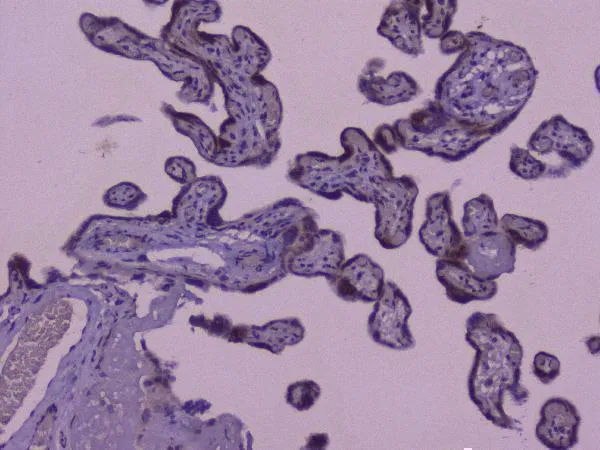
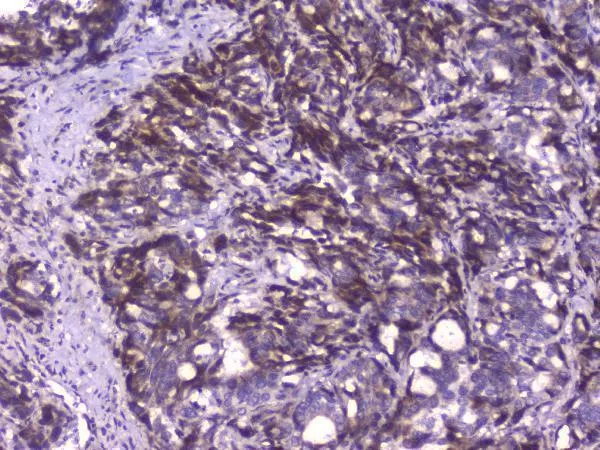
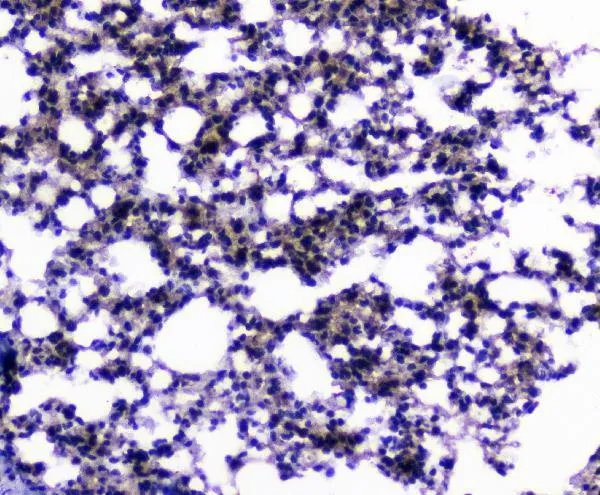
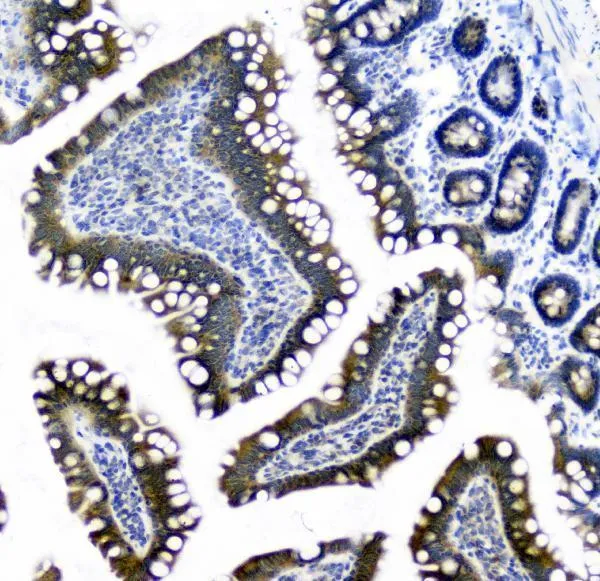
Boster Bio Anti-CIC Antibody Picoband® catalog # A00385-1. Tested in ELISA, IHC applications. This antibody reacts with Human, Mouse, Rat.
Synonyms
Protein capicua homolog; CIC; KIAA0306
Gene Name
CIC
Gene ID
23152
UniProt
Q96RK0
Host
Rabbit
Reactivity
Human, Mouse, Rat
Cross Reactivity
No cross-reactivity with other proteins.
Immunogen
E. coli-derived human CIC recombinant protein (Position: E1433-Q1527) .
Clonality
Polyclonal
Tissue Specificity
Expressed in fetal brain.
Applications
ELISA, IHC
Field of Research
Cell Biology, Proteasome / Ubiquitin, Proteolysis/Ubiquitin
Purification
Immunogen affinity purified.
Concentration
Adding 0.2 ml of distilled water will yield a concentration of 500 μg/ml.
Form
Lyophilized
Reconstitution
Add 0.2ml of distilled water will yield a concentration of 500ug/ml.
Function
Transcriptional repressor which plays a role in development of the central nervous system (CNS) . In concert with ATXN1 and ATXN1L, involved in brain development.
References & Citations
1. Lee, C.-J., Chan, W.-I., Scotting, P. J. CIC, a gene involved in cerebellar development and ErbB signaling, is significantly expressed in medulloblastomas. J. Neurooncol. 73: 101-108, 2005. 2. Lu, H.-C., Tan, Q., Rousseaux, M. W. C., Wang, W., Kim, J.-Y., Richman, R., Wan, Y.-W., Yeh, S.-Y., Patel, J. M., Liu, X., Lin, T., Lee, Y., and 25 others.Disruption of the ATXN1-CIC complex causes a spectrum of neurobehavioral phenotypes in mice and humans. Nature Genet. 49: 527-536, 2017.
Storage Conditions
Store at -20°C for one year from date of receipt. After reconstitution, at 4°C for one month. It can also be aliquotted and stored frozen at -20°C for six months. Avoid repeated freeze-thaw cycles.
Observed Molecular Weight
55 kDa
Specificity
No cross reactivity with other proteins.
Gene Name Synonym
Capicua transcriptional repressor
Subcellular Location
Nucleus.
Isotype
Rabbit IgG
Contents
243