

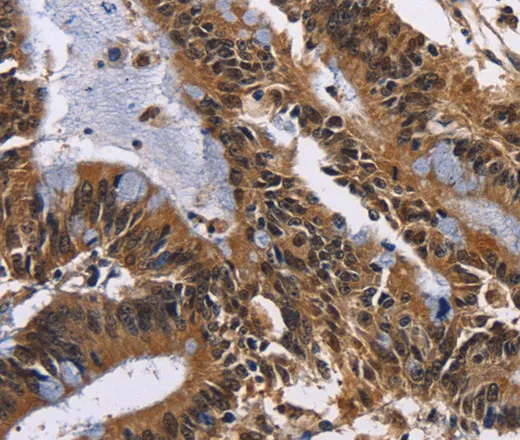
EPHB6 Polyclonal Antibody
UniProtKB · O15197
EPHB6_HUMAN · Homo sapiens
- Primary accession
- O15197
- Review status
- UniProtKB reviewed (Swiss-Prot)
- Gene
- EPHB6
- Protein existence
- 1: Evidence at protein level
- Organism
- Homo sapiens (Human)
- Taxonomy ID
- 9606
- Alternative names
- —
- EC number
- —
- Processing
- Precursor
- Secondary accessions
- A4D2I7, A8CDT5, D3DXD3, Q2TB23, Q2TB24
Technical term
Coding sequence diversity
Ligand
Cellular component
PTM
Molecular function
Domain
Related Products
Alternative Products
Popular Products

MitoTracker Red CMXRos
SKU: G1723-50UG|Size: 50 μg
Erdafitinib (JNJ-42756493)
SKU: MBS3841281-01|Size: 10 mg
Human Lung Cancer Carcinoma Associated Fibroblasts
SKU: ABC-H0079X|Size: 1 Vial
Human Cancer Associated Fibroblasts (CAF)
SKU: ARP1014|Size: 1 Million
Human Lung Squamous Cell Tumor Carcinoma Associated Fibroblasts
SKU: ABC-TC5540|Size: 1 Vial
Tungsten Oxide
SKU: IN12270|Size: 1 Each
Round Snap Lock Containers x 500
SKU: RSL-500|Size: 500 Each
FNC Coating Mix®, 100 ml
SKU: 0407|Size: 100 mL
Mouse Sulfatase 2 (SULF2) ELISA Kit
SKU: RD-SULF2-Mu-01|Size: 96 Tests
POLI Polyclonal Antibody
SKU: RD89193A-01|Size: 60 μL
Mito-Tracker Red CMXRos
SKU: B8810-.05|Size: 50 µg
Mito-Tracker Green
SKU: B8811-.05|Size: 50 µg
MitoTracker Green FM
SKU: HY-135056|Size: 50 µg
MitoTracker Red CMXRos
SKU: G1723-50UG|Size: 50 μg
MitoTracker®Green FM
SKU: CST 9074S|Size: 500 µg
Mito-Tracker Green
SKU: G1740-50UG|Size: 50 μg
MitoTracker Deep Red FM
SKU: T86902-01|Size: 10 mg
Mito-Tracker Deep Red FM
SKU: C1032-50μg|Size: 50 µg
Mito-Tracker Green
SKU: C1048|Size: 50 µg
MitoTracker Red CMXRos
SKU: M9940-01|Size: 50 µg