
The Mouse SETD4 ELISA Kit
Explore the critical role of SETD4 in health and disease and how an ELISA kit facilitates its detection.
Gentaur
Scientific Publications

The Mouse SETD4 ELISA Kit
Essential Insights into SETD4 and its Detection
- SETD4 is a crucial protein lysine N-methyltransferase involved in epigenetic regulation, influencing gene expression and various cellular processes.
- The Mouse SET Domain Containing Protein 4 (SETD4) ELISA Kit is a specialized laboratory tool for quantitatively measuring SETD4 levels in mouse biological samples.
- Research applications for this kit span diverse fields, including oncology, developmental biology, and inflammation studies, reflecting SETD4's multifaceted biological functions.
This link points to a product page for a Mouse SET Domain-Containing Protein 4 (SETD4) ELISA Kit from Gentaur, identified by catalog number 820-ELI-53210m. This kit is a sophisticated research tool designed for the quantitative detection of SETD4 protein within various mouse biological samples, such as serum, plasma, tissue homogenates, and cell lysates. Understanding this kit's utility requires a comprehensive grasp of what SETD4 is, its biological significance, and the principles behind Enzyme-Linked Immunosorbent Assay (ELISA) technology.
SETD4 in Cellular Regulation
SETD4, or SET Domain Containing Protein 4 (GeneCards), is a protein lysine N-methyltransferase. This enzyme is distinguished by its conserved SET domain, a structural motif critical for its methyltransferase activity. SETD4 plays a pivotal role in epigenetic regulation, a process that controls gene expression without altering the underlying DNA sequence. Its primary function involves catalyzing the methylation of histones and non-histone proteins, which can significantly impact a wide array of cellular functions.

The Multifaceted Roles of SETD4
The biological functions of SETD4 are extensive and touch upon numerous fundamental cellular processes. Its involvement in these pathways makes it a protein of significant interest in biomedical research.
Epigenetic Regulation
As a histone methyltransferase, SETD4 influences the methylation status of histones, particularly H3K4me1/me2 and H3K27me3. These modifications are crucial for chromatin structure and gene transcription. By altering histone methylation, SETD4 can either activate or repress gene expression, thereby controlling cellular differentiation, proliferation, and response to external stimuli. NCBI

Cellular Localization and Activity
SETD4 is found in both the cytosol and the nucleus, indicating its involvement in various cellular compartments. Its nuclear presence allows it to interact with chromatin and exert its epigenetic effects. Research also highlights its role in histone H4K20 methyltransferase activity and its capacity to regulate inflammatory responses by influencing H3K4 methylation, which in turn activates cytokines like IL6 and TNF-alpha.
SETD4 in Health and Disease
The involvement of SETD4 extends to critical physiological processes and pathological conditions, particularly cancer.
Pancreatic Development and Homeostasis
SETD4-expressing cells are integral to the development and maintenance of pancreatic function. They also contribute to the pancreatic response to injury, suggesting a role in tissue repair and regeneration.
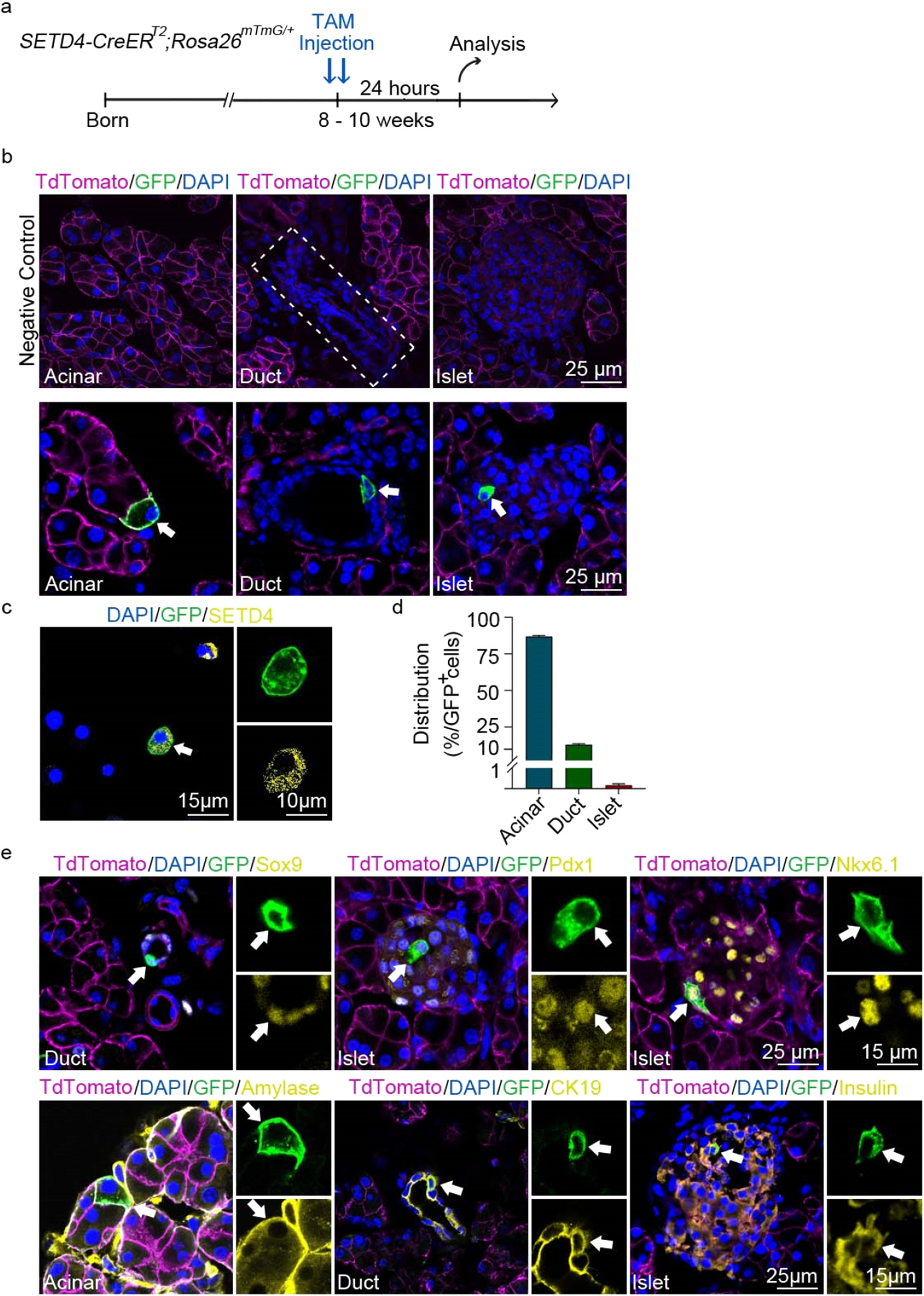
SETD4-expressing cells contribute to pancreatic development and response to cerulein induced pancreatitis injury.
Cancer Progression and Suppression
The role of SETD4 in cancer is complex and context-dependent, sometimes acting as an oncogene and at other times as a tumor suppressor.
- Breast Cancer : SETD4 promotes the proliferation of breast cancer cells and drives G1/S cell cycle progression by upregulating cyclin D1. Conversely, its knockdown can reduce proliferation in ER-negative breast cancer cells. Interestingly, exogenous SETD4 can also suppress tumorsphere formation in breast cancer stem cells (BCSCs), indicating a nuanced role.
- Prostate Cancer : In prostate cancer, SETD4 acts as a tumor suppressor. It inhibits cancer development by promoting H3K27me3-mediated repression of NUPR1 and inducing cell cycle arrest. Higher levels of SETD4 in prostate cancer patients often correlate with better clinical outcomes.
- Other Cancers : SETD4 has been linked to other malignancies, including thymus lymphoma (with delayed onset in Setd4 knockout mice) and gestational choriocarcinoma. Rare oncogenic fusions involving SETD4 have also been reported. 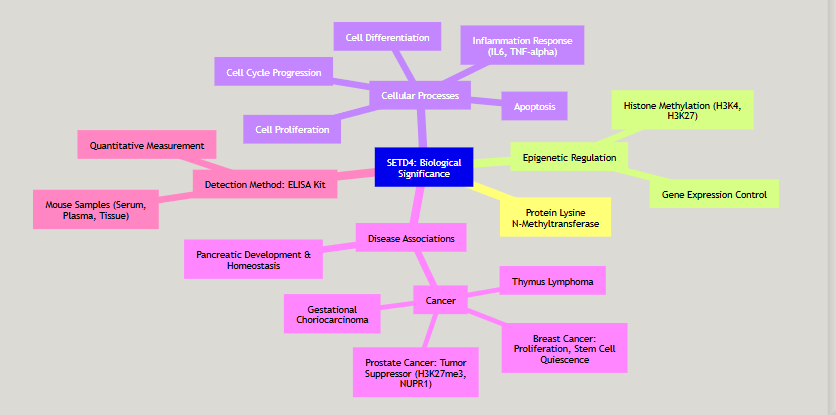
Mindmap illustrating the key biological significance and functions of SETD4.
The Mouse SETD4 ELISA Kit
The Gentaur Mouse SETD4 ELISA Kit is a crucial tool for researchers aiming to quantify SETD4 protein levels in mouse biological samples. ELISA, or Enzyme-Linked Immunosorbent Assay, is a plate-based assay technique designed for detecting and quantifying soluble substances such as peptides, proteins, antibodies, and hormones.
Understanding the ELISA Principle
Most SETD4 ELISA kits, including the one from Gentaur, operate on the principle of a sandwich ELISA. This method is favored for its high sensitivity and specificity.
Sandwich ELISA Mechanism
-Capture Antibody Coating : The wells of a microplate are pre-coated with a capture antibody specific to mouse SETD4. This antibody binds and immobilizes SETD4 present in the sample.
-Sample Incubation : Samples containing SETD4 (e.g., serum, plasma, tissue homogenates) are added to the wells. Any SETD4 present binds to the immobilized capture antibody.
-Detection Antibody Binding : After washing away unbound material, a detection antibody, also specific to SETD4 but binding to a different epitope, is added. This antibody is typically biotinylated.
-Enzyme Conjugate : An enzyme conjugate, such as avidin-HRP (horseradish peroxidase), is then added. This conjugate binds to the biotinylated detection antibody.
-Substrate Reaction : A chromogenic substrate (e.g., TMB) is added, which reacts with the HRP enzyme to produce a colored product.
-Signal Detection : The reaction is stopped, and the optical density (absorbance) of the colored solution is measured using a microplate reader. The intensity of the color is directly proportional to the amount of SETD4 present in the original sample, allowing for quantitative analysis using a standard curve.
Key Features
-Detection Target : Mouse SETD4 protein.
-Assay Type : Sandwich ELISA for high sensitivity and specificity.
-Detection Range : Typically within a few orders of magnitude (e.g., 0.312–10 ng/mL).
-Sensitivity : Minimum detectable dose in the picogram per milliliter range (e.g., 0.156 ng/mL), enabling the quantification of low-abundance proteins.
-Sample Volume : Generally 100 µL per well.
-Plate Format : Usually 96-well plates.
-Incubation Time : Total assay time typically ranges from 2 to 3 hours.
-Precision : Good intra-assay (coefficient of variation, CV < 8%) and inter-assay (CV < 10%) precision ensures reproducible results.
Applications in Research
The Mouse SETD4 ELISA Kit is an invaluable tool for a wide range of research areas :
-Epigenetics : Studying the role of SETD4 in histone methylation and gene regulation.
-Oncology : Investigating SETD4's role as a tumor promoter or suppressor in various mouse cancer models, particularly breast and prostate cancer.
-Developmental Biology : Exploring SETD4's contribution to organogenesis, such as pancreatic development.
-Inflammation : Analyzing SETD4's impact on inflammatory pathways and cytokine production.
-Protein Expression Analysis : Quantifying SETD4 levels in response to experimental interventions or disease states.
Comparative Analysis of ELISA Kit Performance Factors
When selecting an ELISA kit for research, several factors are crucial for successful and reliable results. These factors contribute to the overall performance and utility of the kit in various experimental settings.
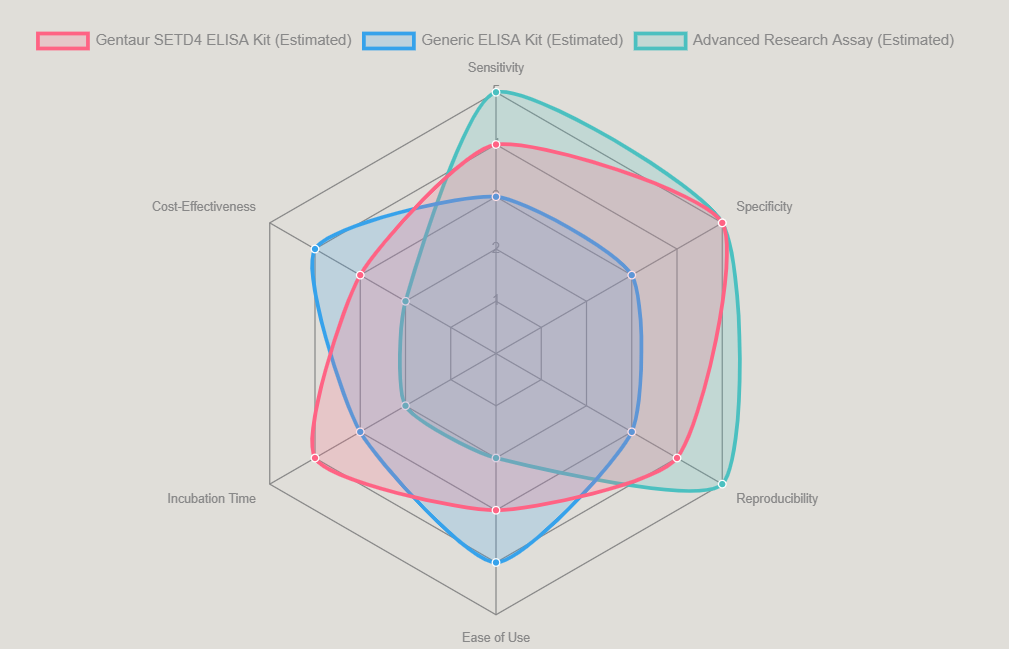
This radar chart provides an estimated comparative analysis of key performance factors for different types of ELISA kits, including the Gentaur SETD4 kit. The scale from 1 to 5 indicates increasing performance.
The radar chart above visualizes estimated performance characteristics. The Gentaur SETD4 ELISA Kit, like many specialized research kits, aims for high specificity and sensitivity to accurately detect the target protein, SETD4, in complex biological samples. This often comes with a moderate ease of use, as ELISAs require careful pipetting and adherence to protocols, and a moderate incubation time typical for sandwich assays. While specialized kits can be more expensive than generic ones, their targeted design and validated performance often justify the investment for specific research goals.
Optimizing Experimental Design with SETD4 ELISA
Proper experimental design and execution are paramount when using an ELISA kit to ensure accurate and reliable results. This involves meticulous sample preparation, adherence to the assay protocol, and appropriate data analysis.
Sample Preparation and Handling
The quality of biological samples directly impacts ELISA results. For mouse samples such as serum, plasma, tissue homogenates, or cell lysates, proper collection, processing, and storage are crucial to preserve SETD4 protein integrity and minimize degradation. Samples should be handled carefully to avoid contamination and proteolytic activity.
Best Practices for Sample Preparation
- Collection : Use appropriate collection tubes and anticoagulants (for plasma) to prevent clotting or hemolysis.
- Processing : Centrifuge samples correctly to separate serum/plasma from cellular components. For tissue homogenates or cell lysates, ensure complete lysis and removal of debris.
- Storage : Store samples at recommended temperatures (e.g., -20°C or -80°C) to maintain protein stability. Avoid multiple freeze-thaw cycles, which can degrade proteins.
- Dilution : Dilute samples as per the kit's instructions to ensure SETD4 concentrations fall within the standard curve's detectable range.
Adhering to the Assay Protocol
Strict adherence to the manufacturer's protocol is essential for consistent and reliable ELISA results. This includes precise timing for incubation steps, thorough washing, and accurate reagent preparation.
Key Steps in the ELISA Protocol
A summarized protocol for a typical SETD4 ELISA :
- Reagent Preparation : Reconstitute lyophilized standards and prepare wash buffer, detection antibody, and HRP conjugate solutions according to instructions. Bring all reagents to room temperature before use.
- Standard Curve Generation : Prepare a serial dilution series of the recombinant SETD4 standard to establish a reliable standard curve. This curve is critical for quantifying unknown sample concentrations.
- Sample and Standard Addition : Add precisely 100 µL of prepared standards and samples to the designated wells of the pre-coated microplate. Incubate at the specified temperature (e.g., 37°C) for the recommended duration (e.g., 90–120 minutes).
- Washing : Aspirate the contents and wash the wells thoroughly (typically 3–5 times) with wash buffer. Effective washing removes unbound components, reducing background noise.
- Detection Antibody Incubation : Add 100 µL of the detection antibody to each well and incubate (e.g., 60 minutes at 37°C).
- HRP Conjugate Incubation : After washing, add 100 µL of the HRP conjugate and incubate (e.g., 30 minutes).
- Substrate Development : Add 90 µL of TMB substrate and incubate in the dark for a specific period (e.g., 15–30 minutes) until a noticeable color develops.
- Stop Reaction : Add 50 µL of stop solution (e.g., sulfuric acid) to halt the enzyme-substrate reaction, stabilizing the color.
- Measurement : Read the absorbance at 450 nm using a microplate reader. Correct for background absorbance if necessary.
Data Analysis and Interpretation
Once absorbance values are obtained, data analysis involves constructing a standard curve and calculating unknown SETD4 concentrations. Software like CurveExpert is often used for a 4-parameter logistic fit to ensure accurate quantification.
Factors Influencing ELISA Results
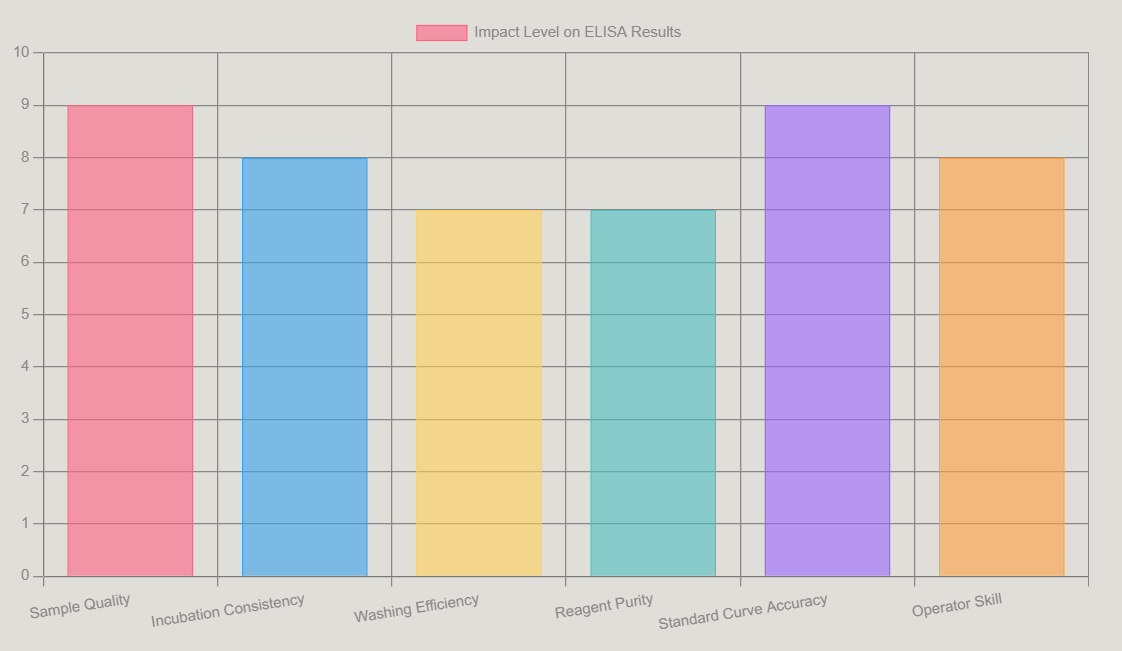
This bar chart illustrates the estimated impact level of various factors on the accuracy and reliability of ELISA results, scaled from 1 (low impact) to 10 (high impact).
As illustrated by the bar chart, factors such as sample quality, the consistency of incubation times and temperatures, and the efficiency of washing steps are critical. The purity and concentration of reagents, along with the accuracy of the standard curve and the skill of the operator, also significantly influence the final outcome. Researchers should meticulously control these variables to ensure the validity of their SETD4 quantification.
The Significance of SETD4 Research
The Mouse SET Domain Containing Protein 4 (SETD4) ELISA Kit represents a vital tool for advanced biological research. By enabling the accurate quantification of SETD4 protein levels, this kit facilitates deeper investigations into SETD4's diverse roles in epigenetic regulation, cellular processes, and disease pathogenesis, particularly in the context of cancer and pancreatic biology. The meticulous application of this assay, coupled with a thorough understanding of SETD4's biology, will continue to unravel critical insights into cellular function and disease mechanisms, paving the way for potential therapeutic strategies.