Host (770442)
Bovine (1090)Canine (20)Cat (403)Chicken (1642)Cod (2)Cow (333)Crab (15)Dog (524)Dolphin (2)Duck (13)E Coli (239120)Equine (7)Feline (1864)Ferret (306)Fish (125)Frog (52)Goat (36847)Guinea Pig (752)Hamster (1376)Horse (903)Insect (2053)Mammalian (512)Mice (6)Monkey (622)Mouse (96350)Pig (197)Porcine (70)Rabbit (360487)Rat (11703)Ray (55)Salamander (4)Salmon (15)Shark (3)Sheep (4247)Snake (4)Swine (301)Turkey (57)Whale (3)Yeast (5335)Zebrafish (3022)Isotype (157270)
IgA (13685)IgA1 (943)IgA2 (319)IgD (1964)IgE (5630)IgG (87508)IgG1 (16749)IgG2 (1328)IgG3 (2724)IgG4 (1692)IgM (22194)IgY (2534)Label (235733)
AF488 (2465)AF594 (662)AF647 (2324)ALEXA (11545)ALEXA FLUOR 350 (255)ALEXA FLUOR 405 (260)ALEXA FLUOR 488 (672)ALEXA FLUOR 532 (260)ALEXA FLUOR 555 (274)ALEXA FLUOR 568 (253)ALEXA FLUOR 594 (299)ALEXA FLUOR 633 (262)ALEXA FLUOR 647 (607)ALEXA FLUOR 660 (252)ALEXA FLUOR 680 (422)ALEXA FLUOR 700 (2)ALEXA FLUOR 750 (414)ALEXA FLUOR 790 (215)Alkaline Phosphatase (825)Allophycocyanin (32)ALP (387)AMCA (80)AP (1159)APC (14233)APC C750 (13)Apc Cy7 (1248)ATTO 390 (3)ATTO 488 (6)ATTO 550 (1)ATTO 594 (5)ATTO 647N (4)AVI (53)Beads (235)Beta Gal (2)BgG (1)BIMA (6)Biotin (27817)Biotinylated (1810)Blue (708)BSA (878)BTG (46)C Terminal (688)CF Blue (19)Colloidal (22)Conjugated (29281)Cy (163)Cy3 (390)Cy5 (2041)Cy5 5 (2469)Cy5 PE (1)Cy7 (3638)Dual (170)DY549 (3)DY649 (3)Dye (1)DyLight (1430)DyLight 405 (7)DyLight 488 (216)DyLight 549 (17)DyLight 594 (84)DyLight 649 (3)DyLight 650 (35)DyLight 680 (17)DyLight 800 (21)Fam (13)Fc Tag (8)FITC (29181)Flag (208)Fluorescent (146)GFP (576)GFP Tag (180)Glucose Oxidase (59)Gold (511)Green (580)GST (722)GST Tag (327)HA Tag (440)His (634)His Tag (507)Horseradish (550)HRP (12994)HSA (247)iFluor (16571)Isoform b (31)KLH (87)Luciferase (105)Magnetic (260)MBP (343)MBP Tag (93)Myc Tag (410)OC 515 (1)Orange (78)OVA (103)Pacific Blue (213)Particle (64)PE (32633)PerCP (7450)Peroxidase (1364)POD (11)Poly Hrp (94)Poly Hrp40 (13)Poly Hrp80 (3)Puro (32)Red (2440)RFP Tag (63)Rhodamine (607)RPE (910)S Tag (194)SCF (184)SPRD (351)Streptavidin (55)SureLight (77)T7 Tag (97)Tag (4806)Texas (1249)Texas Red (1231)Triple (10)TRITC (1401)TRX tag (90)Unconjugated (2110)Unlabeled (218)Yellow (84)Pathogen (489480)
Adenovirus (8685)AIV (317)Bordetella (25032)Borrelia (18284)Candida (17811)Chikungunya (638)Chlamydia (17663)CMV (121402)Coronavirus (5949)Coxsackie (859)Dengue (2872)EBV (1497)Echovirus (215)Enterovirus (677)Hantavirus (259)HAV (909)HBV (2084)HHV (838)HIV (7876)hMPV (275)HSV (2334)HTLV (635)Influenza (22004)Isolate (1208)KSHV (396)Lentivirus (3755)Lineage (3025)Lysate (127759)Marek (94)Measles (1169)Parainfluenza (1692)Poliovirus (3024)Poxvirus (81)Rabies (1526)Reovirus (536)Retrovirus (1066)Rhinovirus (511)Rotavirus (5353)RSV (1768)Rubella (1070)SIV (279)Strain (67791)Vaccinia (7232)VZV (661)WNV (369)Species (2980604)
Alligator (10)Bovine (159815)Canine (120805)Cat (13115)Chicken (113989)Cod (1)Cow (2031)Dog (12723)Dolphin (21)Duck (9606)Equine (2012)Feline (1019)Ferret (259)Fish (12882)Frog (1)Goat (90541)Guinea Pig (87960)Hamster (36960)Horse (41294)Human (950231)Insect (653)Lemur (119)Lizard (24)Monkey (110994)Mouse (470765)Pig (26229)Porcine (131969)Rabbit (127889)Rat (349272)Ray (443)Salmon (348)Seal (8)Shark (29)Sheep (105155)Snake (11)Swine (519)Toad (4)Turkey (244)Turtle (75)Whale (45)Zebrafish (534)Technique (5589781)
Activation (170412)Activity (10795)Affinity (44634)Agarose (2604)Aggregation (199)Antigen (135460)Apoptosis (27407)Array (2022)Blocking (71768)Blood (8530)Blot (10966)ChiP (814)Chromatin (6286)Colorimetric (9907)Control (80079)Culture (3219)Cytometry (5475)Depletion (56)DNA (172527)Dot (233)EIA (1039)Electron (6275)Electrophoresis (254)Elispot (1294)Enzymes (52765)Exosome (4280)Extract (1090)Fab (2227)FACS (43)FC (80717)Flow (6662)Fluorometric (1406)Formalin (97)Frozen (2671)Functional (708)Gel (2480)HTS (136)IF (12906)IHC (16566)Immunoassay (1589)Immunofluorescence (4119)Immunohistochemistry (72)Immunoprecipitation (68)intracellular (5602)IP (2838)iPSC (259)Isotype (8804)Lateral (1587)Lenti (319416)Light (37303)Microarray (47)MicroRNA (4835)Microscopy (52)miRNA (88042)Monoclonal (524801)Multi (3844)Multiplex (302)Negative (4261)PAGE (2521)Panel (1633)Paraffin (2587)PBS (20266)PCR (9)Peptide (276278)PerCP (12769)Polyclonal (2747043)Positive (6336)Precipitation (61)Premix (130)Primers (3467)Probe (2630)Profile (229)Pure (7818)Purification (15)Purified (78235)Real Time (3042)Resin (2975)Reverse (2438)RIA (460)RNAi (17)Rox (1023)RT PCR (6608)Sample (2666)SDS (1524)Section (2895)Separation (86)Sequencing (122)Shift (22)siRNA (319447)Standard (42465)Sterile (10168)Strip (1863)Taq (2)Tip (1172)Tissue (42847)Tube (3306)Vitro (3577)Vivo (981)WB (2515)Western Blot (10683)Tissue (2017019)
Adenocarcinoma (1075)Adipose (3463)Adrenal (657)Adult (4883)Amniotic (65)Animal (2452)Aorta (436)Appendix (89)Array (2022)Ascites (4737)Bile Duct (20)Bladder (1675)Blood (8530)Bone (27367)Brain (31217)Breast (10918)Calvaria (28)Carcinoma (13497)cDNA (58548)Cell (413914)Cellular (9360)Cerebellum (700)Cervix (232)Child (1)Choroid (19)Colon (3911)Connective (3603)Contaminant (3)Control (80079)Cord (661)Corpus (148)Cortex (698)Dendritic (1849)Diseased (265)Donor (1360)Duct (861)Duodenum (643)Embryo (425)Embryonic (4586)Endometrium (466)Endothelium (1424)Epidermis (166)Epithelium (4224)Esophagus (716)Exosome (4280)Eye (2033)Female (475)Frozen (2671)Gallbladder (155)Genital (5)Gland (3437)Granulocyte (8990)Heart (6851)Hela (413)Hippocampus (325)Histiocytic (74)Ileum (201)Insect (4880)Intestine (1945)Isolate (1208)Jejunum (175)Kidney (8079)Langerhans (283)Leukemia (21573)Liver (17342)Lobe (835)Lung (6074)Lymph (1208)Lymphatic (639)lymphocyte (22589)Lymphoma (12787)Lysate (127759)Lysosome (2814)Macrophage (31832)Male (1617)Malignant (1467)Mammary (1987)Mantle (1042)Marrow (2210)Mastocytoma (3)Matched (11710)Medulla (156)Melanoma (15525)Membrane (105780)Metastatic (3575)Mitochondrial (160331)Muscle (37428)Myeloma (748)Myocardium (11)Nerve (6403)Neuronal (17035)Node (1206)Normal (9488)Omentum (10)Ovarian (2511)Ovary (1173)Pair (47185)Pancreas (2843)Panel (1633)Penis (64)Peripheral (1912)Pharynx (122)Pituitary (5421)Placenta (4051)Prostate (9438)Proximal (318)Rectum (316)Region (202208)Retina (956)Salivary (3119)Sarcoma (6946)Section (2895)Serum (24921)Set (167648)Skeletal (13636)Skin (1882)Smooth (7575)Spinal (424)Spleen (2292)Stem (8901)Stomach (925)Stroma (49)Subcutaneous (47)Testis (15396)Thalamus (127)Thoracic (60)Throat (40)Thymus (2988)Thyroid (14138)Tongue (144)Total (10151)Trachea (227)Transformed (175)Tubule (48)Tumor (76992)Umbilical (208)Ureter (73)Urinary (2467)Uterine (303)Uterus (414)Peracetic Acid 35% : A Powerful Disinfectant for Various Applications
Gentaur
Scientific Publications
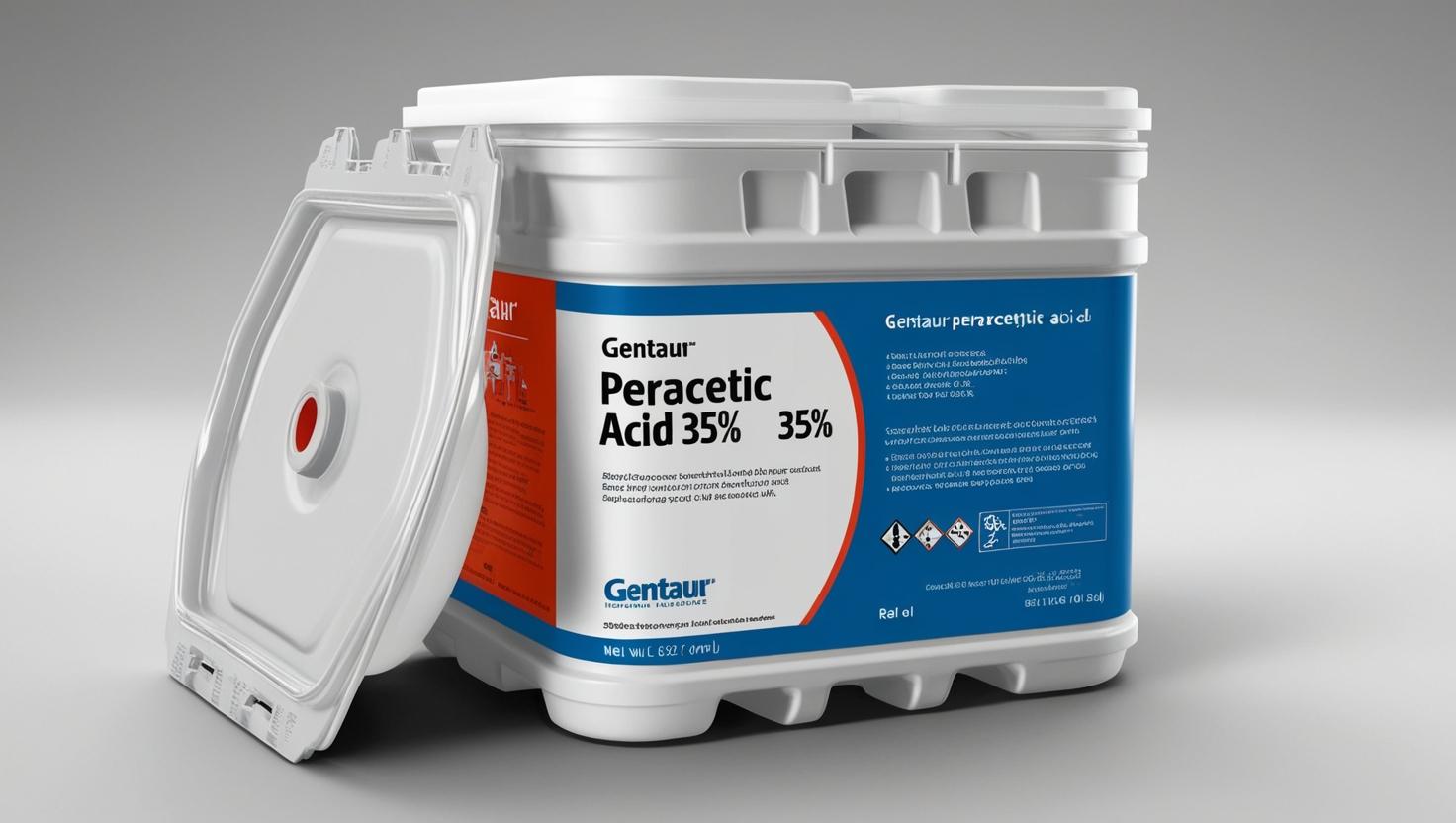
Peracetic Acid 35% : A Powerful Disinfectant for Various Applications
Peracetic Acid 35%
Peracetic acid (PAA) is a strong oxidizing agent widely used for disinfection, sterilization, and sanitation across multiple industries. At a concentration of 35%, it is highly effective against bacteria, viruses, fungi, and spores, making it an excellent choice for industries that require strict hygiene and cleanliness.
What is Peracetic Acid 35%?
Peracetic acid is an organic compound with the chemical formula C2H4O3. It is a colorless liquid with a strong, vinegar-like odor and is typically a mixture of acetic acid, hydrogen peroxide, and water. The 35% concentration is one of the most potent forms available, providing superior antimicrobial properties.
Uses of Peracetic Acid 35%
- Food & Beverage Industry: Used to disinfect processing equipment, pipelines, and storage tanks. It helps eliminate bacteria and biofilms that can contaminate food products.
- Healthcare & Medical Facilities: Applied for sterilizing surgical instruments, endoscopes, and medical surfaces, ensuring pathogen-free environments. Learn more
- Water Treatment: Helps purify drinking water, wastewater, and industrial cooling systems by breaking down organic matter and killing harmful microorganisms. Learn more
- Agriculture: Used to disinfect greenhouses, irrigation systems, and food processing equipment to maintain sanitary conditions.
- Pharmaceutical Industry: Essential in cleanroom environments to prevent contamination in dru g manufacturing.
- Pulp & Paper Industry: Helps with bleaching processes and microbial control.
Advantages of Peracetic Acid 35%
- Broad-spectrum disinfection: Effective against a wide range of pathogens, including bacteria, viruses, and spores.
- Environmentally friendly: Breaks down into acetic acid, water, and oxygen, leaving no harmful residues.
- Non-corrosive to certain materials: Safe for stainless steel and plastics commonly used in food processing and healthcare.
- Works at low temperatures: Unlike some disinfectants, it remains effective even in cold environments.
Safety Considerations
Although peracetic acid is highly effective, it must be handled with care :
- Use protective gloves, goggles, and a mask when handling.
- Work in a well-ventilated area to avoid inhalation of fumes.
- Store in a cool, dark place away from incompatible chemicals like strong bases and reducing agents.
- Follow proper dilution guidelines to ensure safe and effective use.
Protocol for Using Peracetic Acid 35%
1. Preparation
- Ensure all personnel handling peracetic acid wear appropriate PPE (gloves, goggles, mask, and lab coat).
- Work in a well-ventilated or fume-hood-equipped area.
- Have emergency eye-wash stations and spill management kits ready.
2. Dilution Guidelines
- General disinfection: Dilute 1:100 (e.g., 10 mL peracetic acid in 1 L water).
- Surface sterilization: Dilute 1:50 (e.g., 20 mL peracetic acid in 1 L water).
- Water treatment: Dosage varies; refer to manufacturer recommendations for specific applications.
- Medical sterilization: Typically, a 0.2-0.35% solution is used for cold sterilization.
3. Application
- For surface disinfection: Apply the diluted solution using a spray bottle, cloth, or mop and let it sit for 10-15 minutes before rinsing with sterile water.
- For equipment sterilization: Immerse instruments in the solution for the recommended contact time (typically 15-30 minutes), then rinse thoroughly.
- For water treatment: Introduce the solution as per the specified dose rate, ensuring adequate mixing.
4. Post-Treatment & Disposal
- Thoroughly rinse treated surfaces and equipment with clean water to remove residual acid.
- Dispose of any unused or expired peracetic acid according to local hazardous waste regulations.
- Store remaining solution in a tightly sealed container away from heat and direct sunlight.
Conclusion
Peracetic acid 35% is a powerful disinfectant with extensive applications across multiple industries. Its ability to kill harmful microorganisms without leaving toxic residues makes it a preferred choice for maintaining hygiene and safety. However, proper handling, dilution, and storage are crucial to prevent accidents and ensure effectiveness.
Whether in healthcare, food processing, water treatment, or agriculture, peracetic acid 35% continues to be a go-to solution for effective sanitation and sterilization.
Tags
- Peracetic Acid 35%
- C2H403
- PAA disinfectant
- Microbial control
- Pharmaceutical cleaning agent
- Medical sterilization
- Food processing disinfection
- Water treatment chemical
- Agricultural disinfection
