

Pathogen Detection Technologies: From Culture to AI-Based Methods
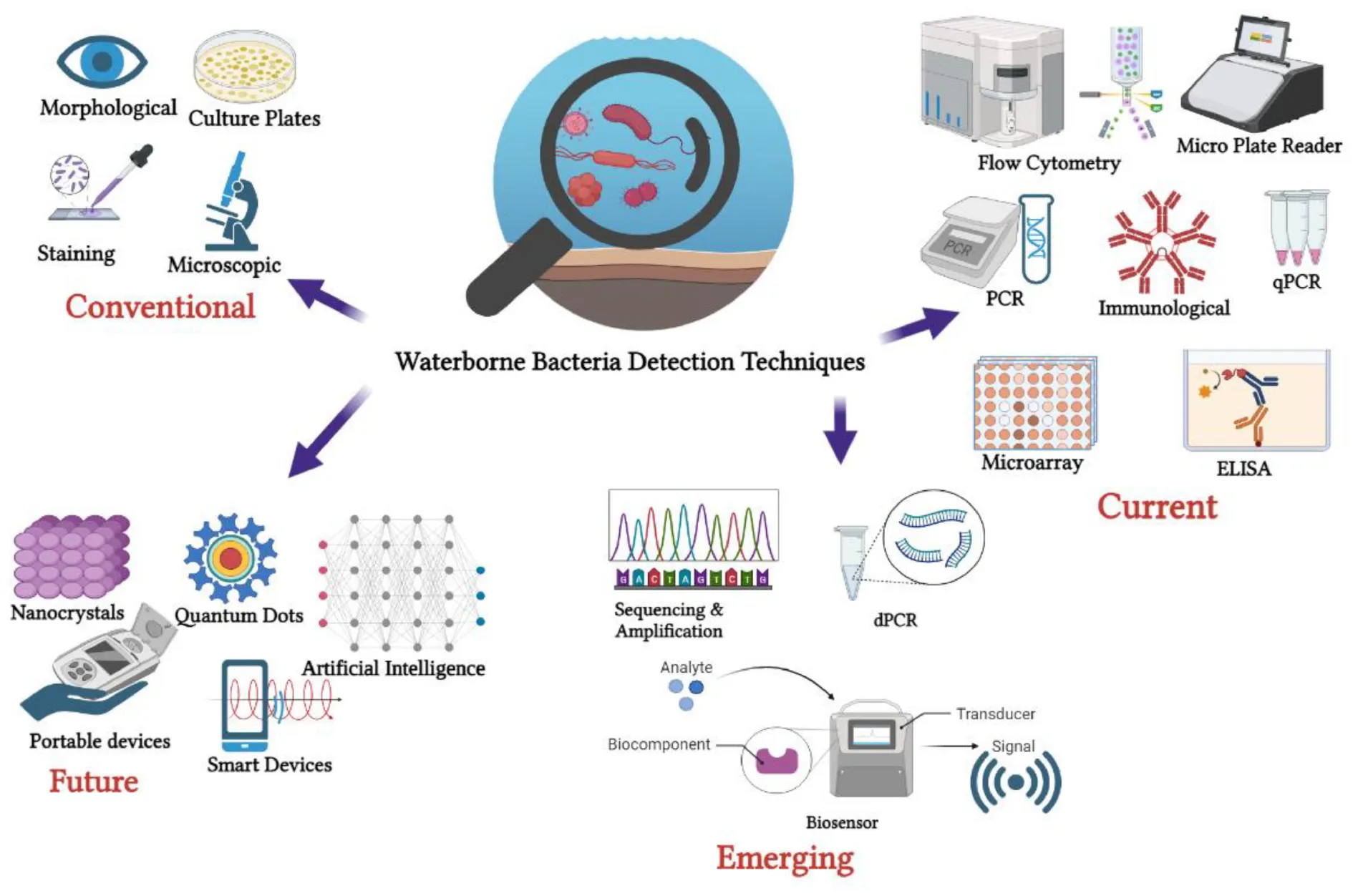
Pathogen detection technologies are at the core of modern microbiology, enabling the identification of bacteria, viruses, and other microorganisms that may affect biological systems, food safety, and environmental quality. Over time, these methods have evolved from traditional laboratory techniques to highly advanced molecular and AI-powered systems.
Today, pathogen detection methods are faster, more accurate, and more scalable than ever before, transforming how laboratories and research facilities operate worldwide.

Pathogen Detection Technologies: From Culture to AI-Based Methods
Traditional Culture-Based Methods
Culture techniques remain the foundation of classical microbiology and are still widely used today.
How it works
- Samples are placed on nutrient media
- Microorganisms grow into visible colonies
- Scientists analyze colony morphology and biochemical behavior
Advantages
- Cost-effective
- Allows observation of live microorganisms
- Useful for antibiotic susceptibility testing
Limitations
- Slow (24–72 hours or longer)
- Some bacteria are difficult or impossible to culture
- Limited ability to detect mixed microbial populations
Despite limitations, culture-based approaches remain essential in many bacterial detection technology workflows.
Molecular-Based Detection Methods
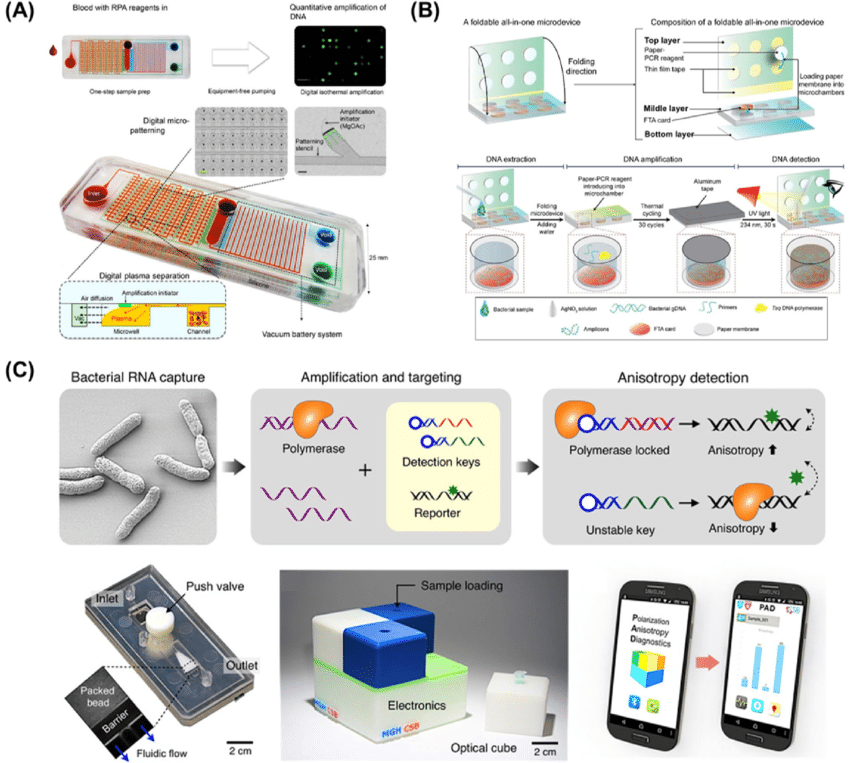
Molecular techniques have revolutionized pathogen identification by targeting genetic material directly.
PCR (Polymerase Chain Reaction)
PCR amplifies DNA sequences specific to pathogens, enabling rapid detection even in low concentrations.
qPCR (Quantitative PCR)
Provides both detection and quantification of microbial load.
Next-Generation Sequencing (NGS)
- Identifies multiple pathogens simultaneously
- Detects mutations and genetic variations
- Useful in outbreak tracking and epidemiology
Advantages
- High sensitivity and specificity
- Faster than culture methods
- Can detect non-culturable organisms
Immunological Detection Methods
Immunology-based techniques rely on antigen–antibody interactions.
ELISA (Enzyme-Linked Immunosorbent Assay)
Detects pathogen-specific proteins or antibodies in samples.
Immunohistochemistry (IHC)
Used to identify microbial or protein markers in tissue samples using enzyme-based color reactions.
Immunofluorescence (IF)
Uses fluorescent markers for highly sensitive visualization under specialized microscopes.
Advantages
- High specificity
- Useful for clinical and research applications
- Can detect active infections and immune responses
Biosensors and Rapid Diagnostic Kits
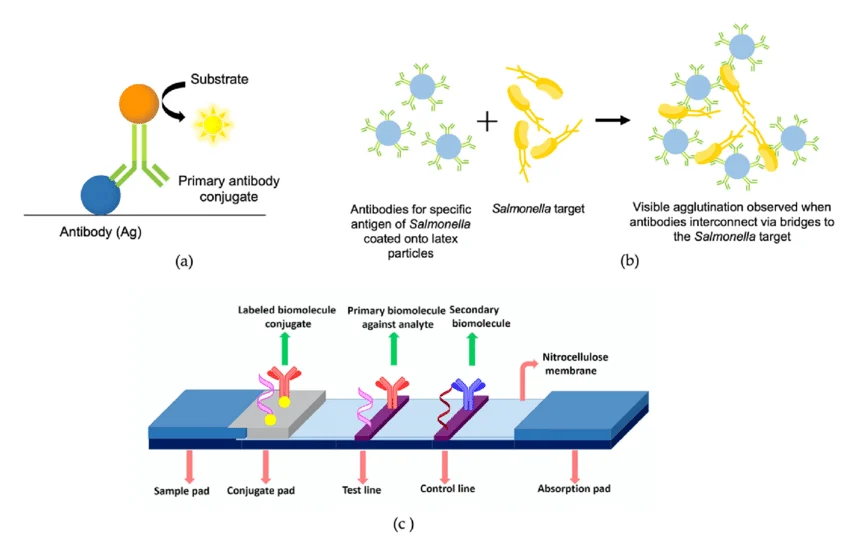
Biosensors are portable devices that detect pathogens using biological recognition elements.
Types
- Electrochemical biosensors
- Optical biosensors
- Lateral flow rapid tests
Applications
- Food safety screening
- Environmental monitoring
- Point-of-care testing
Advantages
- Fast results (minutes to hours)
- Portable and user-friendly
- Suitable for field testing

AI-Based Pathogen Detection Systems
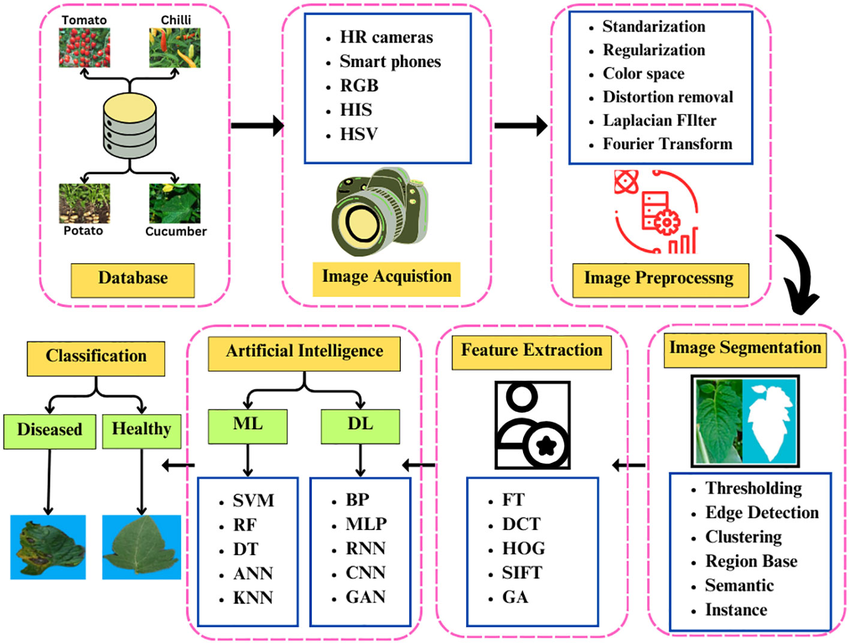
Artificial intelligence is transforming modern microbiology by improving speed, accuracy, and predictive capabilities.
How AI is used
- Image analysis of microbial colonies
- Pattern recognition in genomic data
- Predictive modeling for outbreak tracking
- Integration with laboratory information systems
Applications of AI diagnostics microbiology
- Automated identification of bacterial species
- Early detection of contamination
- Resistance pattern prediction
- Epidemiological surveillance
Advantages
- Reduces human error
- Speeds up diagnostic workflows
- Handles large-scale datasets efficiently
AI-based systems represent the future of AI diagnostics microbiology, enabling smarter and more adaptive laboratory environments.
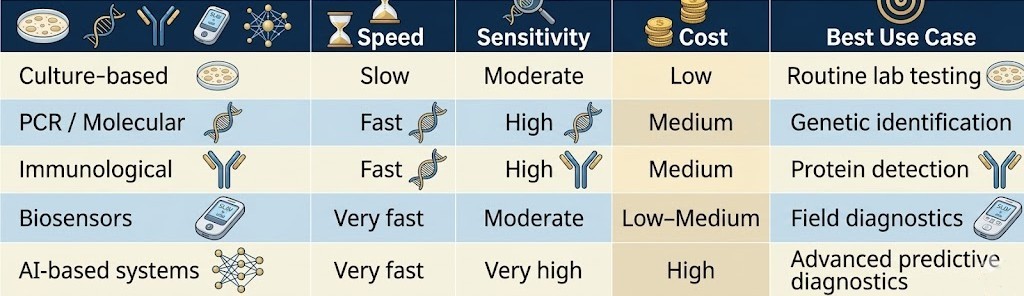
Comparison of Detection Methods
Future of Pathogen Detection Technologies
The future of pathogen detection methods is moving toward integration and automation:
- AI combined with sequencing technologies
- Fully automated diagnostic laboratories
- Real-time surveillance systems
- Portable multi-pathogen detection devices
These innovations will significantly enhance bacterial detection technology, improving global response to microbial threats.
Conclusion
Pathogen detection has evolved from simple culture techniques to advanced AI-powered systems. Each method plays a critical role in modern microbiology, and their integration is shaping the future of diagnostics.
As technology continues to progress, AI diagnostics microbiology will become a central pillar in rapid, accurate, and scalable pathogen identification systems worldwide.