
N-terminal Arginylation Antibody: HRP
CAT:
400-SMC-264D-HRP
Size:
100 µg
Price:
Ask
- Availability: 24/48H Stock Items & 2 to 6 Weeks non Stock Items.
- Dry Ice Shipment: No



N-terminal Arginylation Antibody: HRP
Background:
Protein arginylation is the post-translational addition of arginine to proteins by arginyltransferase ATE1. Arginylation of proteins has been found to play an essential role in physiological pathways during embryogenesis and adulthood (1). Arginylation has also been shown to regulate cell stress responses, including ER stress, cytosolic misfolded proteins, and heat stress (2).Description:
Mouse Anti-N-terminal Arginylation Monoclonal IgG1Specifications:
Specific for N-terminal arginine, next to both glutamic acid and aspartic acid. Does not detect internal arginine.Product Name Alternative:
N-terminal Arginine Antibody, N-terminal Arginylation Antibody, N-terminal Arginylated Antibody, N terminal Arginine Antibody, N terminal Arginylation Antibody, N terminal Arginylated Antibody, Amino-terminal Arginine Antibody, Amino-terminal Arginylation Antibody, Amino-terminal Arginylated Antibody, Amino terminal Arginine Antibody, Amino terminal Arginylation Antibody, Amino terminal Arginylated AntibodySynonyms:
N-terminal Arginylation Antibody, Clone 4D12: HRPUNSPSC:
12352203Cellular Locus:
Endoplasmic ReticulumHost:
MouseSpecies Reactivity:
Species IndependentImmunogen:
Synthetic N-terminal arginylated peptide conjugated to KLHTarget:
N-terminal ArginylationClonality:
MonoclonalIsotype:
IgG1Clone:
4D12Conjugation:
HRPValidated Applications:
WB, IHC, ELISAPurification:
Protein G PurifiedLimit Of Detection:
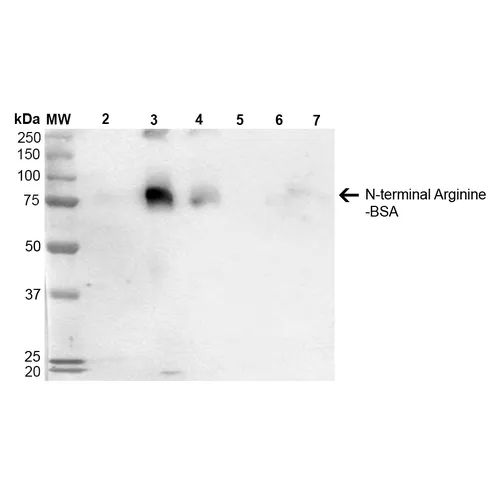
A 1:1000 dilution of SMC-264 was sufficient for detection of N-terminal Arginylation in 0.5 ug of N-terminal Arginine peptide conjugated to BSA by ECL immunoblot analysis using goat anti-mouse IgG:HRP as the secondary antibody.Concentration:
1 mg/mlDilution:
WB (1:1000); optimal dilutions for assays should be determined by the user.Weight:
0.1Buffer:
73.64mM Carbonate, 54.55mM Ethanolamine, 45.45mM Cyanoborohydride, 18.18mM Sodium Hydroxide and 0.23mM Citrate in dH2OPrecautions:
Not for use in humans. Not for use in diagnostics or therapeutics. For in vitro research use only.References & Citations:
1. Saha S. and Kashina A. (2011) Dev Biol. 385(1): 1-8. 2. Deka K., et al. (2016) Cell Death Discov. 2: 16074.CAS Number:
9007-83-4
DATASHEET Document
View DocumentMSDS Document
View Document